Moraga
Quieter and greener than Lafayette or Orinda, Moraga is home to Saint Mary's College, the summer Commons concert series, Campolindo High, the Hacienda de las Flores, and one of the East Bay's most family-oriented small-town rhythms.
Last updated:
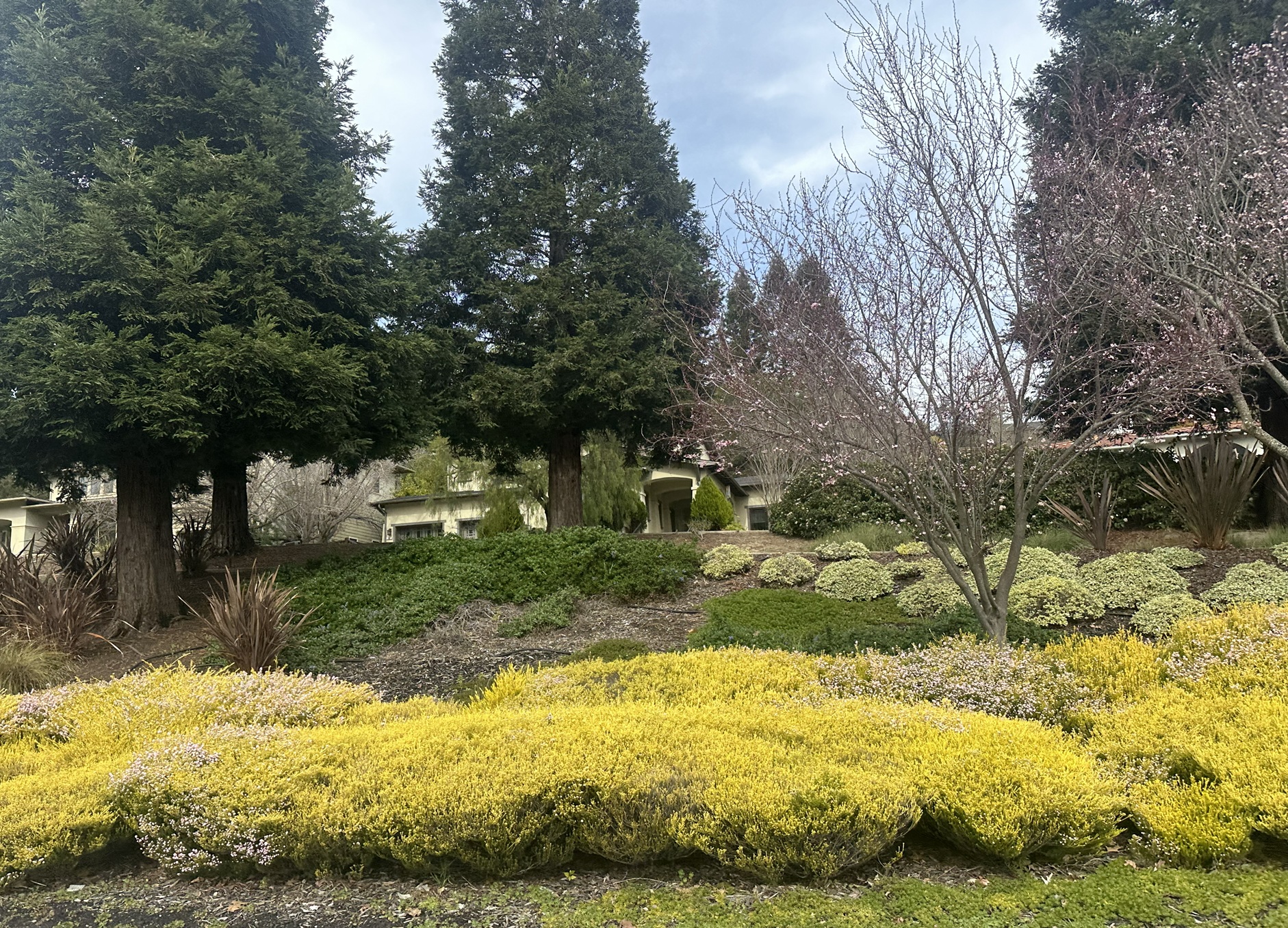
Moraga is the quietest of the three Lamorinda towns — more residential, more spread out, and a little more rural in feel. It’s home to Saint Mary’s College and some of the area’s most scenic neighborhoods.
The Essentials
- Population: ~17,000
- BART Access: No (closest: Orinda or Lafayette, ~10–15 minutes by car)
- Vibe: Quiet, family-oriented, tucked away
- ZIP code: 94556
- School district (K-8): Moraga School District
- School district (9-12): Acalanes Union High School District (Campolindo High)
- Incorporated: 1974
Overview
Where Lafayette has the downtown and Orinda has the freeway-front face of Lamorinda, Moraga has space. The hills are greener. The lots are larger. The commercial life is split across two modest shopping centers rather than a single Restaurant Row, and the pace is slower because residents like it that way.
Moraga sits in a bowl of hills south of Lafayette and Orinda, accessed primarily by Moraga Way (from Orinda) and Moraga Road (from Lafayette). The drive in from either direction is itself worth the trip — winding two-lane roads through oak woodland, with rolling green ridges climbing on either side most of the year.
Two big factors shape what Moraga actually feels like to live in. First, Saint Mary’s College has been part of the town’s identity since the 1920s; you cannot drive across Moraga without noticing the campus’s clean white architecture against the hills. Second, the absence of a BART station tilts the demographic toward families and retirees over commuters. Moraga is where you live when schools come first, BART can be a 10-minute drive, and you want a yard your dog can actually run in.
History
Moraga carries the legacy of one of California’s founding families. José Joaquín Moraga was a Spanish soldier who led the expedition that founded San Francisco’s Presidio in 1776 — literally one of the people who started San Francisco. His descendants received a massive land grant from the Mexican government in 1835: Rancho Laguna de los Palos Colorados, covering much of what’s now Moraga and parts of Orinda.
The Moraga Adobe, built in 1841 and still standing in Orinda, is the oldest building in the entire East Bay. For most of the 19th and early 20th century the area remained ranchland — cattle, walnuts, and pears. Saint Mary’s College moved to Moraga in 1928, occupying the campus it still uses today. The town grew slowly through the mid-20th century and incorporated as recently as 1974 — among the last East Bay cities to do so. The careful, late incorporation is part of why Moraga still feels less developed than its neighbors today.
Visiting in March or April? You’ll see Moraga at its most beautiful. The surrounding hills turn a vivid emerald green after winter rains, and wildflowers start dotting the ridgelines. It’s when the “greener hills” claim really delivers.
Neighborhoods
Moraga’s neighborhoods offer more space and green than the rest of Lamorinda. Each has its own character:
- Campolindo — Family-focused neighborhood anchored by Campolindo High School. Walkable to school, athletics-oriented, classic 1960s–1970s ranch-style architecture.
- Moraga Country Club — Gated, golf-course living. Easier entry point than other gated communities in the Bay Area; mix of single-family and townhouse stock.
- Sanders Ranch — Newer subdivision tucked against open space, larger lots, semi-rural feel. The eastern edge of town.
- Rheem Valley — Moraga’s mid-town commercial corner. Convenient, walkable to shopping, mix of housing stock.
Explore all Moraga neighborhoods →
Schools
Schools are the single biggest reason families choose Moraga over its larger neighbors:
- Moraga School District (K-8) — Camino Pablo, Donald Rheem, and Los Perales Elementary, plus Joaquin Moraga Intermediate School. Small, tight-knit district with consistently top test scores.
- Acalanes Union High School District (9-12) — All Moraga students attend Campolindo High School, which routinely ranks in the top 1–2% of California public high schools and outscores most private schools in the region on AP and college-placement metrics.
Joaquin Moraga Intermediate School is named after the actual José Joaquín Moraga — the Spanish soldier whose family the town is named after. Generations of Moraga kids have walked across his namesake school’s stage at promotion in 8th grade and then on to Campolindo.
For a deeper comparison across the four districts that serve Lamorinda, see the Lamorinda Schools Guide.
The Town Centers
Dining and shopping split between two modest centers:
- Moraga Shopping Center — Anchored by Safeway. Local restaurants, a hardware store, dry cleaners, and the kind of services that make daily life work without a trip out of town.
- Rheem Shopping Center — More restaurants, the iconic Rheem Theatre (a single-screen independent movie house that has anchored the corner since 1957), Si Si Caffe, and a mix of small retailers.
It’s not walkable between them, but parking is easy at both, and most residents end up rotating naturally between the two depending on which side of town they live on.
Things to Do
For a town as quiet as Moraga claims to be, there’s plenty to fill a weekend:
- Moraga Commons Park — The town’s flagship park. Summer concert series, splash pad, playground, skate park, ball fields. The Thursday-night summer concerts (6:30–8:30pm, June through August) at the Bandshell are a 40+ year community ritual — free, family-friendly, food trucks on-site, Loard’s ice cream, beer and wine by the Lions and Kiwanis clubs, and pizza by the slice from Penninis.
- Saint Mary’s College — Gaels basketball and soccer games, art exhibits at the Hearst Art Gallery, walking the campus loop on a quiet Sunday. Worth visiting even if you’re not affiliated.
- Lafayette-Moraga Regional Trail — Connects north to Lafayette along an old rail right-of-way. 7.5 miles, paved, mostly flat. Walk, run, bike, push a stroller.
- Rancho Laguna Park — Equestrian area and open space. Trails for hiking and horseback riding.
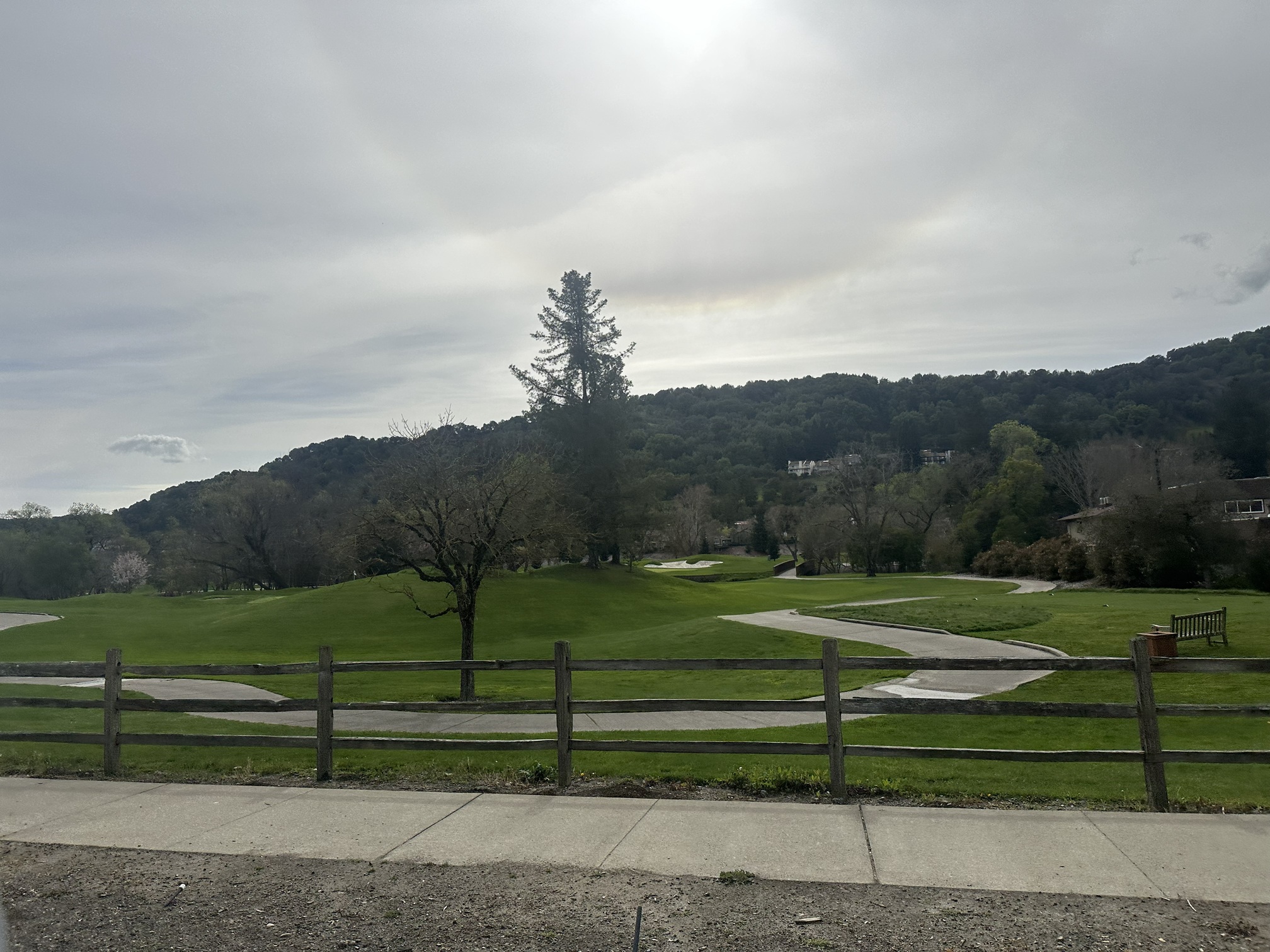
- Moraga Country Club — Golf, tennis, and a community hub for the surrounding neighborhoods.
- Surrounding hills — The drive on Moraga Way or up to the ridgeline along Pinehurst Road shows off the East Bay at its prettiest.
Dining
Moraga is not a destination dining town like Lafayette, but the everyday options are solid:
- Terzetto Cuisine — Italian in the Rheem center, popular for date night.
- Loard’s Ice Cream — Local institution; the kids’ standard reward.
- Si Si Caffe — Italian café, sandwiches, espresso. Locals’ morning spot.
- Ranch House — American comfort food.
- Asia Palace — Reliable Chinese-American, popular for takeout.
- Hideout Kitchen and Cafe — Brunch and lunch favorite.
For a bigger night out, residents typically drive 10 minutes into Lafayette’s Restaurant Row.
Real Estate Snapshot
Moraga real estate generally runs a touch below Lafayette and Orinda per square foot, almost entirely because of the lack of a BART station. For buyers who don’t need daily rail access — retirees, work-from-home professionals, families whose commute is across the East Bay or down to Silicon Valley — Moraga is often the best value in Lamorinda. Median single-family prices typically land $1.5M–$2.4M, with Sanders Ranch and the better Campolindo streets pushing well past $3M.
For a more detailed picture across all three towns, including monthly market updates, see Real Estate in Lamorinda.
Who Loves It Here
Moraga tends to attract:
- Families with school-age kids for whom Campolindo High is the deciding factor — easily the most common Moraga story.
- Work-from-home professionals trading BART convenience for larger lots and quieter streets.
- Retirees drawn to the country club, the open space, and the easygoing pace.
- Saint Mary’s faculty and staff whose work is across town from the rest of Lamorinda.
- Equestrians, gardeners, and hill-walkers — anyone whose ideal weekend involves dirt under their boots rather than a downtown coffee.
What you don’t find: late-night nightlife, urban density, or anything resembling a traffic problem.
Getting Here
- Car (from SF): Highway 24 through the Caldecott Tunnel, exit at Moraga Way (Orinda) or take Highway 24 to St. Mary’s Road in Lafayette. 35–45 minutes off-peak.
- BART: Drive to Lafayette or Orinda station (about 10–15 minutes), then BART to SF.
- Bus: County Connection 28 runs between Moraga and Orinda BART.
- Bike: The Lafayette-Moraga Regional Trail is the main bike spine.
Local Lore: The Name
Moraga carries the legacy of one of California’s founding families. José Joaquín Moraga was a Spanish soldier who led the expedition that founded San Francisco’s Presidio in 1776. His descendants received a massive land grant from the Mexican government in 1835: Rancho Laguna de los Palos Colorados, covering much of what’s now Moraga and parts of Orinda. The Moraga Adobe, built in 1841 and still standing in Orinda, is the oldest building in the entire East Bay. When the area developed in the 20th century, the town took the family’s name. So yes, Joaquin Moraga Intermediate School is named after a genuine California pioneer.
Frequently Asked Questions
Is Moraga a good place to live? Moraga is one of the safest, most family-oriented suburbs in the East Bay. It has top-ranked schools, abundant open space, and a strong sense of community. It’s a quieter, more residential alternative to Lafayette and Orinda.
Does Moraga have BART? No. Most Moraga residents drive to Lafayette BART or Orinda BART, typically 10–15 minutes away.
What high school do Moraga kids attend? Moraga students attend Campolindo High School, consistently ranked among the top public high schools in California.
What is the population of Moraga? Approximately 17,000 residents, plus the student population of Saint Mary’s College during the school year.
Why are home prices in Moraga lower than Lafayette and Orinda? Mainly because Moraga lacks a BART station. For families prioritizing schools and lot size over commute, Moraga is often the best value in Lamorinda.
Related
Want to go deeper into Moraga? Start with these neighborhood guides and resources:
- Campolindo — Athletic, school-centered family neighborhood
- Moraga Country Club — Gated, golf-course living
- Sanders Ranch — Newer construction, semi-rural
- Rheem Valley — Convenient mid-town Moraga
- Moraga School District — K-8 schools
- Acalanes Union High School District — Campolindo High
- Real Estate in Lamorinda — Buying and selling guide
- Moving to Lamorinda — Relocation guides by origin city
Moraga Neighborhoods
A guide to Moraga's distinct neighborhoods — from prestigious Sanders Ranch to family-friendly Campolindo
Moraga Restaurants — A Local's Guide to Where to Eat in Moraga, CA
Where to eat in Moraga, California — Chef Chao, Michael's/Pennini's, La Finestra, Si Si Caffé, Loard's Ice Cream, and the rest. Hours, addresses, what each place is actually known for, and which spots to book for graduation parties and date nights.