Lafayette
Downtown dining, the reservoir, and small-town charm with easy BART access
Last updated:
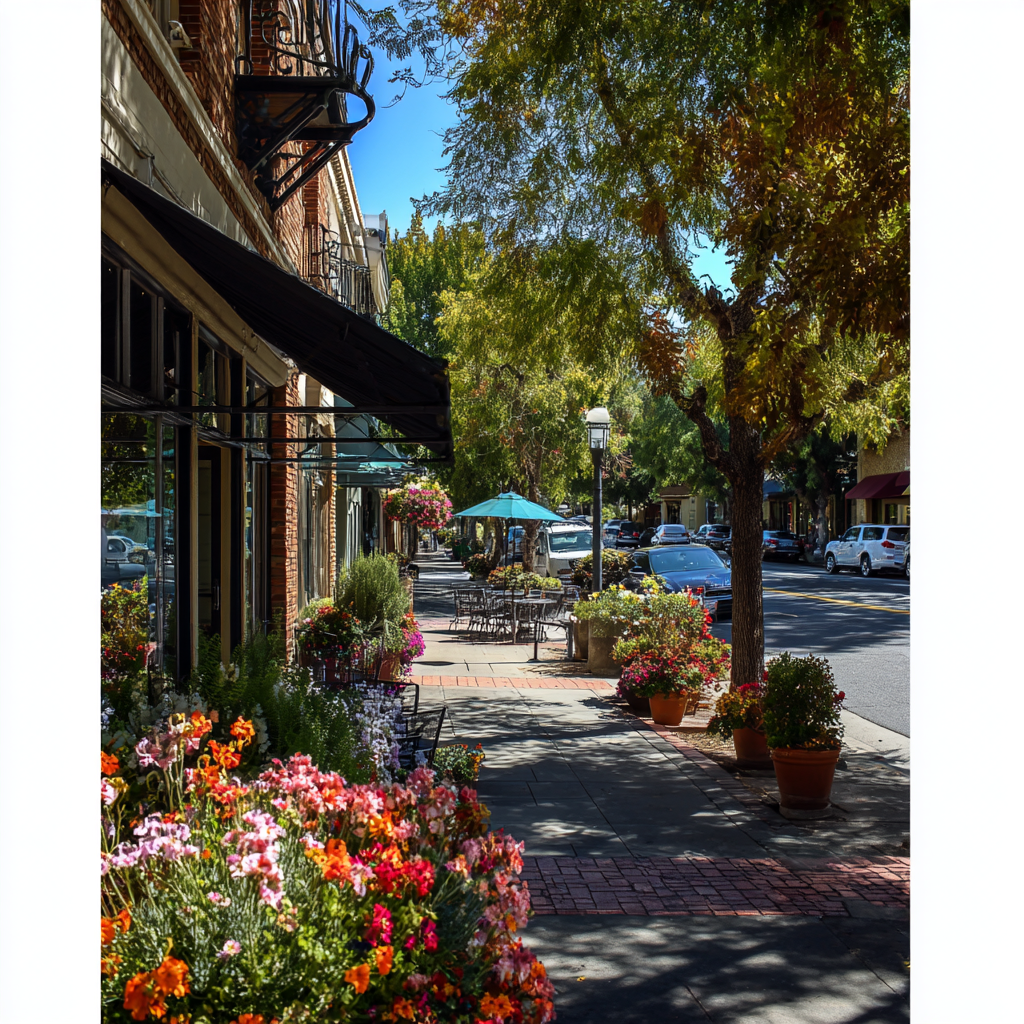
Lafayette is the commercial heart of Lamorinda. With a walkable downtown, dozens of restaurants along Mt. Diablo Boulevard, and its own BART station, it offers the best of suburban living with urban conveniences.
The Essentials
- Population: ~26,000
- BART Access: Yes — Lafayette Station
- Vibe: Upscale suburb with a real downtown
- ZIP code: 94549
- School district (K-8): Lafayette School District
- School district (9-12): Acalanes Union High School District
- Incorporated: 1968
Visiting in March? This is Lafayette at its best. The hills are impossibly green, the reservoir is full from winter rains, and wildflowers are starting to appear along the trails. Take a golden-hour stroll around the reservoir loop — the evening light on the water with green hills behind is quintessential California.
Overview
Lafayette occupies a sweet spot in the East Bay: close enough to San Francisco that the commute is genuinely workable, far enough that the air is clean, the hills are green, and the night sky still has stars. Its 26,000 residents enjoy what is, on paper, an unlikely combination — a real downtown you can walk to, top-tier public schools, direct rail access to the city, and a 928-acre reservoir at the edge of town.
The town stretches along a narrow valley framed by oak-studded hills. Highway 24 cuts through the middle, BART runs alongside it, and Mt. Diablo Boulevard threads the commercial spine. Pull off the freeway at any of the three Lafayette exits and you’re within five minutes of either downtown, a trailhead, or your driveway.
What makes Lafayette unusual for a Bay Area suburb is the density of its civic life. The library is busy. The Saturday morning crowd at the Orinda Farmers Market five minutes east is half-Lafayette. The 4th of July parade actually has a crowd. The high school football games draw locals who haven’t had a kid in the district for a decade. People know their neighbors. They run into each other at Diablo Foods or at Susie’s Coffee. It is a town in the older sense of the word — a place with a there, there.
History
Lafayette was settled in the 1840s by Elam Brown, a pioneer who acquired land here as part of the Rancho Acalanes grant. He named the settlement after the Marquis de Lafayette — the French aristocrat who fought alongside Washington in the American Revolution. (You’ll find Lafayettes scattered across America; there are more than 40 U.S. places with the name. This one has perhaps the most pleasant setting.)
For most of its first century, Lafayette was ranch and orchard country. Walnut trees, fruit trees, dairy cows, and a small downtown clustered around the road that became Mt. Diablo Boulevard. The opening of the original Caldecott Tunnel in 1937 began the slow shift from ranchland to suburb. Lafayette incorporated as a city in 1968. BART service reached Lafayette in 1973, and and the population, which had been counted in the hundreds for a century, jumped to suburban scale.
The town has resisted the temptation to overbuild. Downtown’s height limits, the open-space designations across the hills, and the careful approach to new development are deliberate. Residents like that you can still see the ridgeline from the parking lot at Trader Joe’s.
Downtown Lafayette
The stretch of Mt. Diablo Boulevard through town is what makes Lafayette special. Unlike many suburbs where retail scatters across strip malls, Lafayette has a genuine “there” there:
- Restaurant Row — Dozens of dining options from casual to upscale
- Local shops — Boutiques, bookstores, services
- La Fiesta Square — Shopping center with restaurants and shops
- Walkable — Park once, stroll between spots
A typical Saturday morning has people walking dogs along Mt. Diablo Boulevard, sitting outside Susie’s or Chow with a coffee, and ducking into bookshops or the hardware store — many of them just back from the Orinda Farmers Market up the road. By evening, Restaurant Row is alive in a way that few suburban “downtowns” actually manage.
Neighborhoods
Lafayette offers the widest variety of neighborhoods in Lamorinda. Each has its own character, schools, and price range:
- Downtown — Walkable, urban village feel. The only neighborhood in Lamorinda where you can leave the car in the driveway and reach restaurants, BART, and the library on foot.
- Burton Valley — Family heartland, flat streets, sidewalks, and one of the most beloved elementary schools in the district. The Lafayette equivalent of “everyone wants to live here.”
- Happy Valley — Prestigious hillside estates, larger lots, secluded settings. Some of the most expensive real estate in Lamorinda is on Happy Valley Road.
- Trail/Reliez Valley — Active lifestyle, trail access, and a diverse housing mix. The Lafayette-Moraga Trail runs right through it.
Explore all Lafayette neighborhoods →
Schools
Lafayette’s schools are an important consideration for many families. School performance, programs, enrollment rules, and attendance boundaries can change, so buyers should verify current information directly with the relevant district. The town is served by two districts:
- Lafayette School District (K-8) — Burton Valley, Happy Valley, Lafayette, and Springhill Elementary, plus Stanley Middle School. Performance measures vary by year and source. Review current California School Dashboard data and district information rather than relying on a fixed ranking.
- Acalanes Union High School District (9-12) — Most Lafayette students attend Acalanes High School, with some neighborhoods feeding into Las Lomas.
Acalanes High School is the original district high school and has been Lafayette’s flagship secondary school since 1940. Graduation rates exceed 97%. The athletic program is competitive; the arts and music programs are unusually strong for a public school of its size; and college placement is genuinely impressive — every year a handful of seniors place at UC Berkeley, Stanford, and the Ivy League.
For a deeper comparison across the four districts that serve Lamorinda, see the Lamorinda Schools Guide.
Things to Do
For a town of 26,000, Lafayette has an outsized list of things you can actually do on a weekend:
- Lafayette Reservoir — The crown jewel. The 2.7-mile paved loop is a near-universal local ritual. Kayak rentals in season, fishing for trout and bass year-round, and a picnic area that books up for birthdays months in advance.
- Lafayette-Moraga Regional Trail — Paved, mostly flat, 7.5 miles connecting Lafayette to Moraga along an old rail right-of-way. Walk, run, bike, or push a stroller.
- Briones Regional Park — Trailhead access from the north end of town via Bear Creek Road. Serious hiking, mountain biking, and the kind of views that make people post real-estate listings on Instagram.
- Acalanes Ridge — Smaller open space, great for short hikes and evening dog walks.
- Lafayette Library and Learning Center — Genuinely beautiful building with a strong public-program lineup.
- Annual Lafayette Art & Wine Festival — Held every September; one of the East Bay’s best community festivals.
Dining
Mt. Diablo Boulevard’s reputation as “Restaurant Row” is earned. Highlights across price points:
- Postino — Beloved Italian on the west end of downtown; reservations recommended.
- Yankee Pier — Casual New England seafood; the lobster roll has been on locals’ weekly rotation for years.
- Chow — Fresh, all-day American comfort food. The neighborhood favorite.
- Roam Artisan Burgers — Grass-fed burgers; a reliable weeknight stop.
- Knoxx — Upscale steakhouse for special occasions.
- Susie’s Cafe — The morning coffee meeting spot. The bakery case alone is worth the trip.
- Batch & Brine — Modern bistro with a serious wine list.
These are just the most enduring favorites — Lafayette’s dining scene rotates enough that even longtime residents make discoveries on a Friday night out.
Real Estate Snapshot
Lafayette is the most expensive of the three Lamorinda towns on a price-per-square-foot basis, driven by the combination of school quality, BART access, and the walkable downtown. Prices, inventory, and days on market vary materially by date, property, and neighborhood. Review a dated market source and property-specific comparable sales before making a decision.
For a more detailed picture across all three towns, including monthly market updates and a buyer’s checklist, see Real Estate in Lamorinda.
Who Loves It Here
Lafayette tends to attract a recognizable type:
- Bay Area families ready to leave a city apartment for a yard, a top-tier public school, and a community where kids can ride bikes to friends’ houses.
- Tech and finance commuters who want BART without the commute pain of farther-out suburbs. The 35-minute ride to Embarcadero is one of the best in the region.
- Empty-nesters trading larger homes for downtown condos and townhouses — Lafayette’s downtown housing stock is small but growing.
- Returning locals — people who grew up here, left for college, and came back to raise their own kids in Burton Valley or Happy Valley.
What you generally don’t find: people looking for nightlife, low taxes, or anonymity. Lafayette is the opposite of all three.
Getting Here
- BART: Lafayette Station (Antioch line) — about 35 minutes to Embarcadero off-peak.
- Car: Highway 24 through the Caldecott Tunnel — three Lafayette exits (Pleasant Hill Road, Oak Hill Road, Acalanes Road / First Street).
- Bike: Connected via the Lafayette-Moraga and Iron Horse regional trail systems.
- Air: Oakland International (OAK) is roughly 25 minutes; SFO is about 45–55 minutes depending on traffic.
Local Lore: The Name
Yes, that Lafayette. The town is named for the Marquis de Lafayette — the French aristocrat who fought alongside George Washington in the American Revolution. In the 1850s, when early settler Elam Brown established a settlement here, the name honored America’s favorite Frenchman. You’ll find Lafayettes scattered across America (there are over 40 U.S. places with the name), but this one has perhaps the most pleasant setting: rolling California hills, oak-studded valleys, and that golden light the East Bay does so well.
Frequently Asked Questions
Is Lafayette, CA a good place to live? Lafayette consistently ranks among the best places to live in the East Bay. It combines top-rated schools (Acalanes Union High School District), a walkable downtown, BART access to San Francisco, and access to thousands of acres of open space. Crime is low, the community is engaged, and the small-town feel survives despite the town being just 30 minutes from downtown SF.
How long is the BART ride from Lafayette to San Francisco? Lafayette to Embarcadero is roughly 35 minutes during off-peak hours on the Antioch line, and 40–45 minutes during peak commute. Lafayette is the second stop east of the Caldecott Tunnel after Orinda.
What high school do Lafayette kids attend? Most Lafayette students attend Acalanes High School, with some neighborhoods feeding into Las Lomas High School. Both schools are part of the Acalanes Union High School District. Families should compare current state data, programs, and district information directly.
Is Lafayette walkable? Downtown Lafayette is genuinely walkable. Most residential neighborhoods are car-oriented suburban streets, though Burton Valley is the most walkable residential area due to its flat terrain and sidewalks.
What is there to do in Lafayette? The Lafayette Reservoir, downtown’s Restaurant Row, the Lafayette-Moraga Regional Trail, Briones Regional Park, and the annual Art & Wine Festival are the marquee draws. Day-to-day, downtown gives you a week’s worth of restaurants and the library; for a weekly farmers market, Lamorinda residents drive five minutes to the Orinda (Saturday) or Moraga (Sunday) markets.
Related
Want to go deeper into Lafayette? Start with these neighborhood guides and resources:
- Downtown Lafayette — Walkable urban village feel
- Burton Valley — Family heartland, top elementary
- Happy Valley — Prestigious hillside estates
- Trail / Reliez Valley — Active, trail-connected living
- Lafayette School District — K-8 schools
- Acalanes Union High School District — 9-12 schools
- Real Estate in Lamorinda — Buying and selling guide
- Moving to Lamorinda — Relocation guides by origin city
Lafayette Neighborhoods
A guide to Lafayette's distinct neighborhoods — from flatland Burton Valley to hilltop Happy Valley
Lafayette Park Hotel & Spa
The Lafayette Park Hotel & Spa at 3287 Mt. Diablo Blvd — Lamorinda's full-service hotel, spa, and special-events venue. Home of the Park Bistro & Bar, the rehearsal-dinner and graduation-weekend headquarters for visiting families, and one of the best Sunday brunches in the East Bay.
Lafayette Restaurants - A Local's Guide to Restaurant Row & Beyond
Where to eat in Lafayette, California - Postino, RÊVE, The Hideout Kitchen, Batch & Brine, Social Bird, Metro Lafayette, Rancho Cantina, and the rest of Restaurant Row. Hours, addresses, what each place is actually known for, and which to book for graduation parties and date nights.